

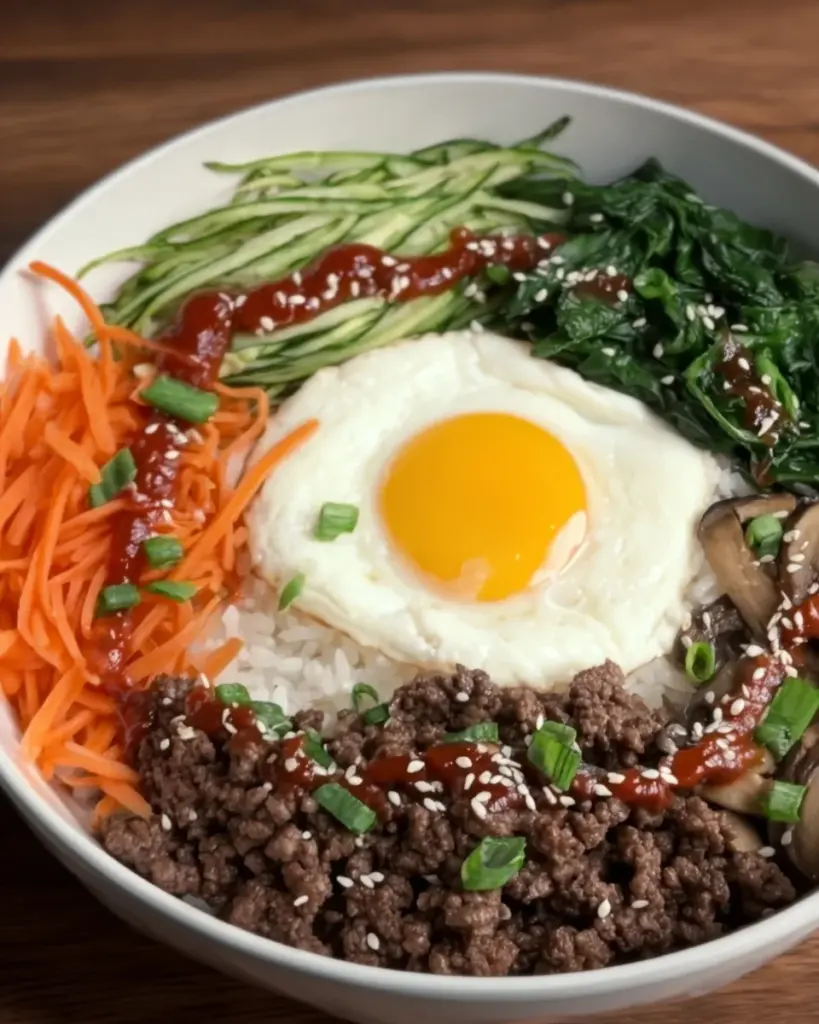
Experience the delightful flavors of Bibimbap with Ground Beef, a traditional Korean dish that perfectly combines warm rice, seasoned ground beef, vibrant vegetables, and a fried egg. This dish is ideal for various occasions, whether it’s a cozy family dinner or a gathering with friends. The standout qualities of Bibimbap lie in its colorful presentation and the harmonious blend of flavors, making it not only visually appealing but also a comforting meal.
Why You’ll Love This Recipe
- Quick and Easy: This recipe comes together in just 35 minutes, making it perfect for busy weeknights.
- Flavorful and Satisfying: The combination of seasoned ground beef and fresh vegetables ensures every bite is packed with flavor.
- Customizable: Feel free to swap in your favorite vegetables or proteins for a personal touch.
- One-Bowl Meal: Everything you need is in one bowl, making cleanup a breeze.
- Healthy Ingredients: Packed with nutrients from fresh vegetables and lean ground beef, it’s a wholesome choice for dinner.
Tools and Preparation
To prepare this delicious Bibimbap with Ground Beef, you’ll need some essential tools to make the cooking process smooth and efficient.
Essential Tools and Equipment
- Skillet
- Non-stick skillet
- Cutting board
- Knife
- Serving bowls
Importance of Each Tool
- Skillet: Ideal for browning the ground beef and sautéing the vegetables.
- Non-stick skillet: Perfect for frying eggs without sticking, ensuring a beautiful finish.
- Cutting board: Provides a safe surface for chopping your ingredients quickly.
Ingredients
For the Rice
- 2 cups cooked white rice
For the Beef
- 1 pound ground beef
- 1 teaspoon salt
- 1 teaspoon ground black pepper
- 2 tablespoons soy sauce
- 1 tablespoon sesame oil
- 1 teaspoon sugar
For the Vegetables
- 2 carrots, julienned
- 1 zucchini, julienned
- 1 cup spinach, blanched
- 4 shiitake mushrooms, sliced (or any mushrooms of your choice)
For Toppings
- 4 eggs
- 4 tablespoons gochujang (Korean red chili paste)
- 2 tablespoons sesame seeds
- 2 green onions, finely chopped

How to Make Bibimbap with Ground Beef
Step 1: Prepare the Beef
In a skillet over medium heat, add the ground beef. Season it with salt, pepper, soy sauce, sesame oil, and sugar. Cook until browned and cooked through, about 5-7 minutes. Remove from heat and set aside.
Step 2: Sauté the Vegetables
In the same skillet, add a drizzle of sesame oil. Sauté the carrots and zucchini until softened, about 3-4 minutes. Add the sliced mushrooms and cook for another 2 minutes. Stir in the blanched spinach and cook for 1 more minute. Remove from heat.
Step 3: Fry the Eggs
In a separate non-stick skillet, heat a little oil over medium heat. Crack in the eggs and fry until the whites are set but the yolk is still runny or to your preference.
Step 4: Assemble the Bibimbap
In serving bowls, place a generous serving of cooked white rice. Top each bowl with portions of seasoned ground beef, sautéed vegetables, and a fried egg.
Step 5: Add Toppings
Drizzle each bowl with gochujang and sprinkle with sesame seeds and chopped green onions.
Step 6: Serve
Mix everything together before eating to blend all flavors. Enjoy your homemade Bibimbap!
How to Serve Bibimbap with Ground Beef
Bibimbap with Ground Beef is a versatile dish that can be customized in numerous ways. Serving it right enhances its appeal and flavor, making your meal even more enjoyable.
Bowl Presentation
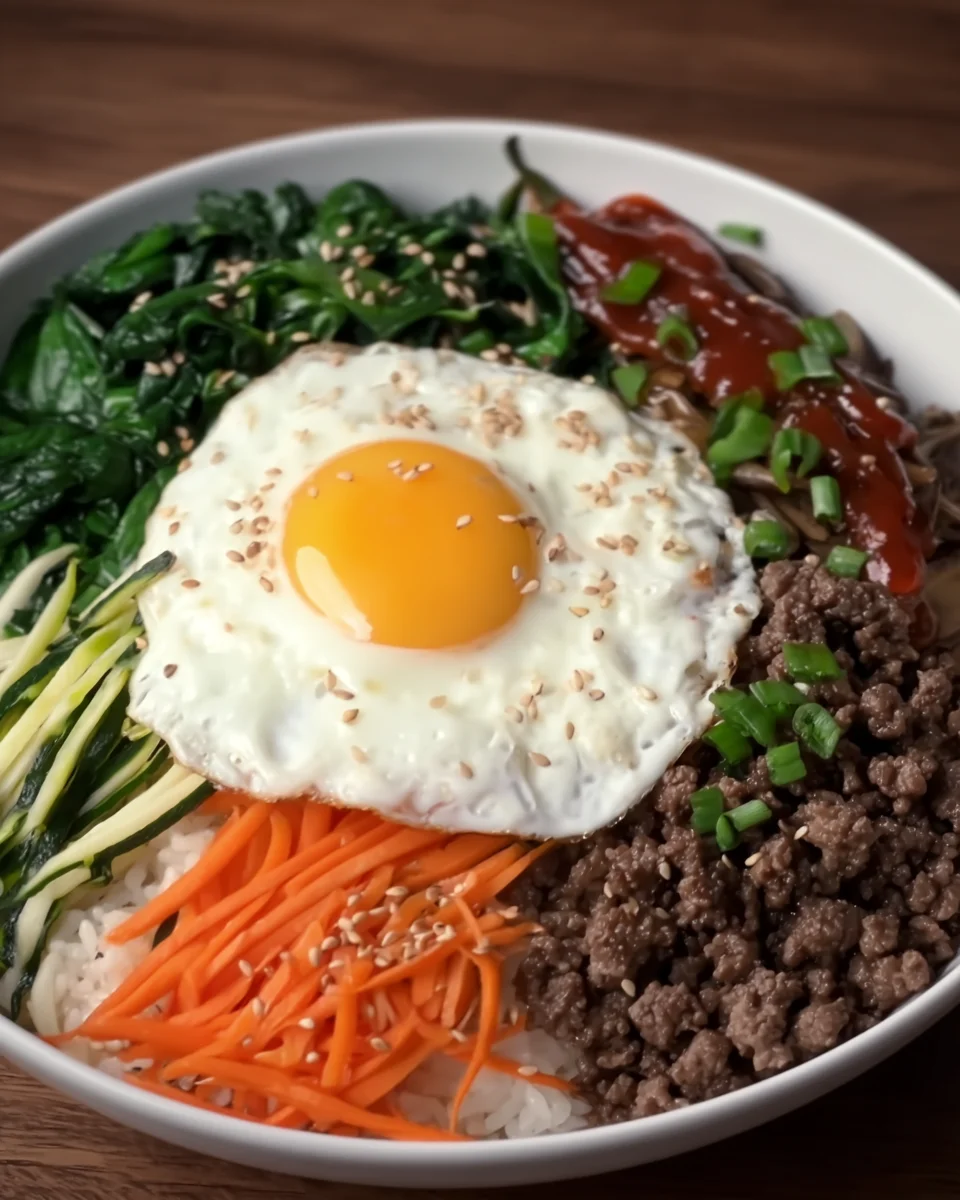
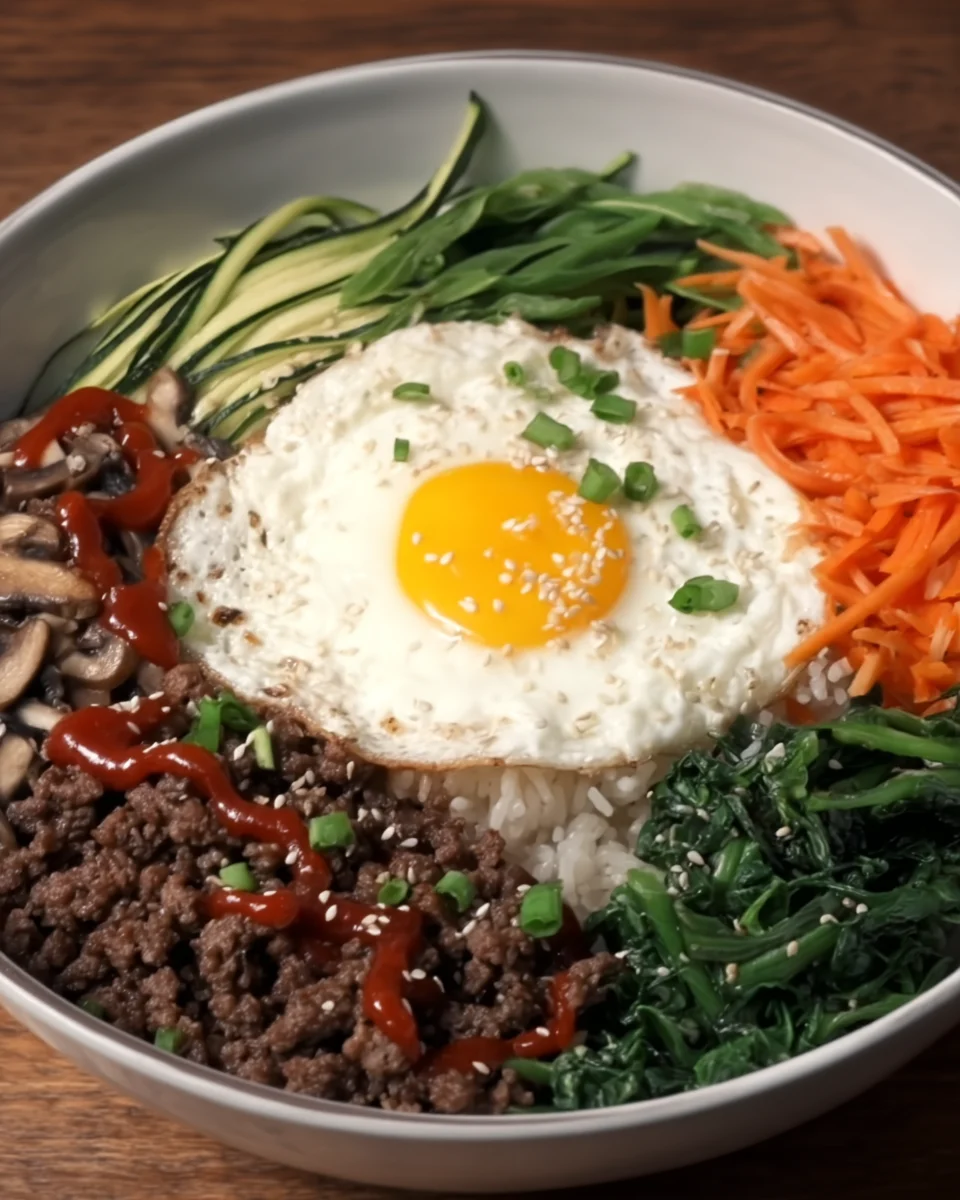
- Use a large, shallow bowl to allow the vibrant colors of the ingredients to shine.
- Arrange the toppings in separate sections over the rice for a beautiful presentation.
Garnishes
- Sesame Seeds: Sprinkle toasted sesame seeds on top for added crunch and flavor.
- Chili Flakes: Offer chili flakes on the side for those who enjoy an extra kick.
Mixing Styles
- Mix It Up: Encourage guests to mix their Bibimbap before eating, ensuring all flavors blend together.
- Layering: For those who prefer, layering the ingredients instead of mixing can enhance each bite’s unique taste.
Accompaniments
- Pickled Vegetables: Serve with traditional Korean pickles for a tangy contrast.
- Kimchi: This spicy fermented cabbage adds depth and complexity to your Bibimbap experience.
How to Perfect Bibimbap with Ground Beef
Creating the ideal Bibimbap with Ground Beef involves attention to detail. Here are some tips for achieving delicious results:
- Use Fresh Ingredients: Fresh vegetables enhance flavor and texture in your dish.
- Control Cooking Time: Avoid overcooking vegetables; they should retain some crunch for a delightful bite.
- Adjust Spice Levels: Tailor the amount of gochujang based on your spice tolerance; start small if you’re unsure.
- Experiment with Proteins: While ground beef is traditional, feel free to try chicken or tofu as alternatives.
- Use High-Quality Rice: Short grain rice works best for that sticky texture typical in Bibimbap.
- Opt for a Non-Stick Skillet: This helps achieve perfectly fried eggs without sticking.
Best Side Dishes for Bibimbap with Ground Beef
Side dishes can greatly complement your Bibimbap, enhancing its flavors and offering variety. Here are some excellent options:
- Korean Pickled Radish: A crunchy and tangy side that balances out the richness of the meal.
- Spicy Cucumber Salad: Refreshing cucumbers tossed in chili sauce provide a cool contrast.
- Seaweed Salad: Lightly seasoned seaweed adds umami and is packed with nutrients.
- Steamed Broccoli: Simply steamed broccoli offers a healthy green touch alongside your main dish.
- Miso Soup: A warm, comforting soup pairs well with Korean flavors and completes the meal.
- Tofu Stir-Fry: Quick-fried tofu cubes seasoned with soy sauce add protein and texture diversity.
Common Mistakes to Avoid
Making Bibimbap with Ground Beef can be a delightful experience, but there are common mistakes that can affect the final dish.
- Using Unseasoned Beef: Failing to properly season the ground beef can lead to a bland dish. Always incorporate salt, soy sauce, and sesame oil to enhance the flavor.
- Overcooking Vegetables: Overcooked vegetables lose their texture and color. Sauté them just until tender for vibrant and crunchy additions.
- Skipping the Egg: The fried egg is a key element in Bibimbap. Skipping it means missing out on the creamy richness it adds to the meal.
- Not Mixing Before Eating: Serving without mixing can result in uneven flavors. Encourage everyone to mix all elements together for a balanced taste.
- Using Cold Rice: Cold rice doesn’t blend well with toppings. Use warm, freshly cooked rice for the best texture and flavor.
Storage & Reheating Instructions
Refrigerator Storage
- Store leftovers in an airtight container.
- Consume within 3-4 days for best quality.
Freezing Bibimbap with Ground Beef
- Place in freezer-safe containers or bags.
- Can be frozen for up to 2 months.
Reheating Bibimbap with Ground Beef
- Oven: Preheat to 350°F (175°C). Cover and heat for about 15-20 minutes until warmed through.
- Microwave: Place in a microwave-safe dish, cover loosely, and heat on high for 2-3 minutes, stirring halfway through.
- Stovetop: Heat in a skillet over medium heat, stirring occasionally until hot.
Frequently Asked Questions
Bibimbap with Ground Beef often raises several questions among home cooks. Here are some common inquiries.
Can I customize my Bibimbap with Ground Beef?
Yes! You can add or substitute any vegetables you like, such as bell peppers or bean sprouts, based on your preference.
What type of rice is best for Bibimbap?
Short-grain white rice is traditional as it provides a sticky texture that holds everything together nicely.
How spicy is Bibimbap with Ground Beef?
The spiciness mainly comes from the gochujang. You can adjust the amount used based on your heat tolerance.
Can I make this dish vegetarian?
Absolutely! Substitute ground beef with tofu or tempeh and use vegetable broth instead of meat-based sauces.
How do I serve Bibimbap with Ground Beef?
Serve it in individual bowls where everyone can mix their ingredients together just before eating.
Final Thoughts
Bibimbap with Ground Beef is an incredibly versatile dish that appeals to many tastes. Its colorful presentation and rich flavors make it perfect for any occasion. Feel free to customize your bowl by adding different vegetables or proteins to suit your preferences!

Bibimbap with Ground Beef
- Total Time: 35 minutes
- Yield: Serves 4
Description
Experience the vibrant and comforting flavors of Bibimbap with Ground Beef, a traditional Korean dish that brings together warm rice, seasoned ground beef, colorful vegetables, and a perfectly fried egg. This one-bowl meal is not only visually appealing but also incredibly satisfying, making it ideal for busy weeknights or special gatherings. With its customizable nature, you can easily tailor this recipe to your taste preferences by swapping in different proteins or veggies. Enjoy a wholesome dish packed with nutrients and delightful textures that everyone will love.
Ingredients
- 2 cups cooked white rice
- 1 pound ground beef
- 1 teaspoon salt
- 1 teaspoon black pepper
- 2 tablespoons soy sauce
- 1 tablespoon sesame oil
- 2 carrots (julienned)
- 1 zucchini (julienned)
- 1 cup spinach (blanched)
- 4 shiitake mushrooms (sliced)
- 4 eggs
- 4 tablespoons gochujang
- 2 tablespoons sesame seeds
- 2 green onions (chopped)
Instructions
- In a skillet over medium heat, brown the ground beef with salt, pepper, soy sauce, sesame oil, and sugar for about 5-7 minutes. Set aside.
- Sauté carrots and zucchini in the same skillet for about 3-4 minutes until softened. Add mushrooms and spinach; cook for an additional minute.
- Fry eggs in a non-stick skillet until whites are set but yolks remain runny.
- Assemble bowls with rice topped with ground beef, sautéed vegetables, and a fried egg.
- Drizzle with gochujang and garnish with sesame seeds and green onions before serving.
- Prep Time: 15 minutes
- Cook Time: 20 minutes
- Category: Main
- Method: Frying
- Cuisine: Korean
Nutrition
- Serving Size: 1 serving
- Calories: 550
- Sugar: 5g
- Sodium: 800mg
- Fat: 30g
- Saturated Fat: 10g
- Unsaturated Fat: 18g
- Trans Fat: 0g
- Carbohydrates: 45g
- Fiber: 3g
- Protein: 28g
- Cholesterol: 210mg
Leave a Comment